Choose an approach that suits the building, the brief and the evidence available. The number of panes or a product name isn’t enough to rank every option for every noise problem.
This comparison focuses on specification decisions. It does not provide a table of universal installed noise reductions.
Start with the type of upgrade
Decide whether the project is considering repair, a change to glazing within a suitable existing assembly, a separate secondary system or a replacement window. Each approach raises different questions about retained fabric, operation, interfaces and evidence.
Record the reasons for considering the intervention. On a historic building, begin with significance and retention. On an occupied hotel, include room access and trial-room planning.
What glazing labels mean
Laminated and acoustic laminated glass
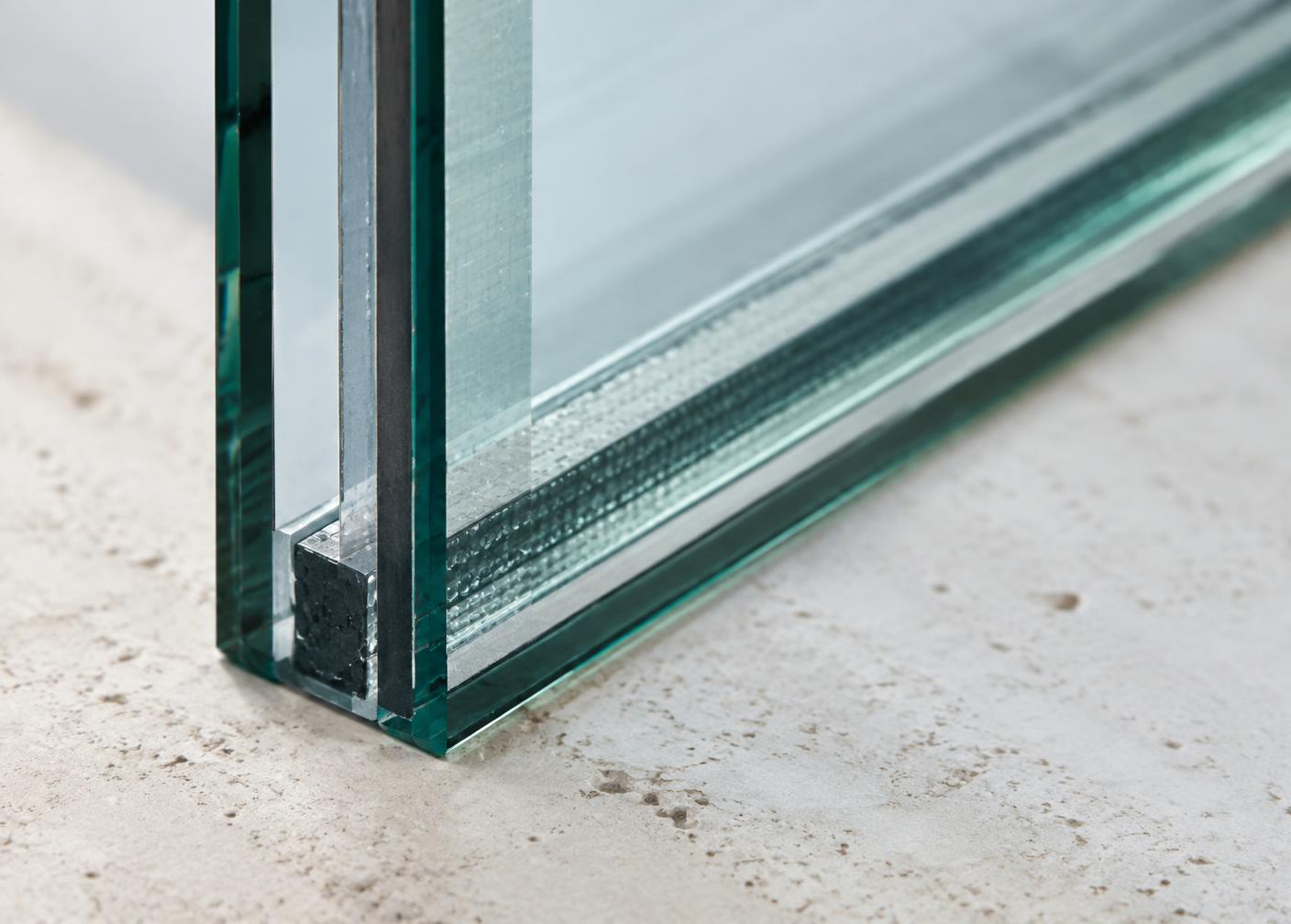
Laminated constructions use bonded layers and an interlayer. The exact product and configuration matter to its acoustic evidence. A generic description such as “laminated glass” should not substitute for the proposed construction and report reference.
Double and triple glazing
Pane count describes part of a glazing construction. Review pane types, thicknesses, cavities and the whole window around them. Do not assume that adding a pane establishes the best acoustic option for the project.
Secondary systems
A secondary system adds a separate internal assembly alongside the existing window. Review the relationship between the systems, their operation, access and evidence for the proposed arrangement. The feasibility and outcome depend on the actual configuration.
Questions to compare options
| Approach | Questions to resolve before selection |
|---|---|
| Repair or adjustment | What is defective, what work is justified and what acoustic issue remains? |
| Glazing change in an existing assembly | Is the frame suitable, and what evidence applies to the changed window? |
| Replacement window | What complete assembly, opening arrangement and interfaces are proposed? |
| Separate secondary system | Can both systems operate and be maintained, and what arrangement is assessed? |
The table organises due diligence. It does not say that each approach is technically suitable for the same building or requirement.
Compare figures fairly
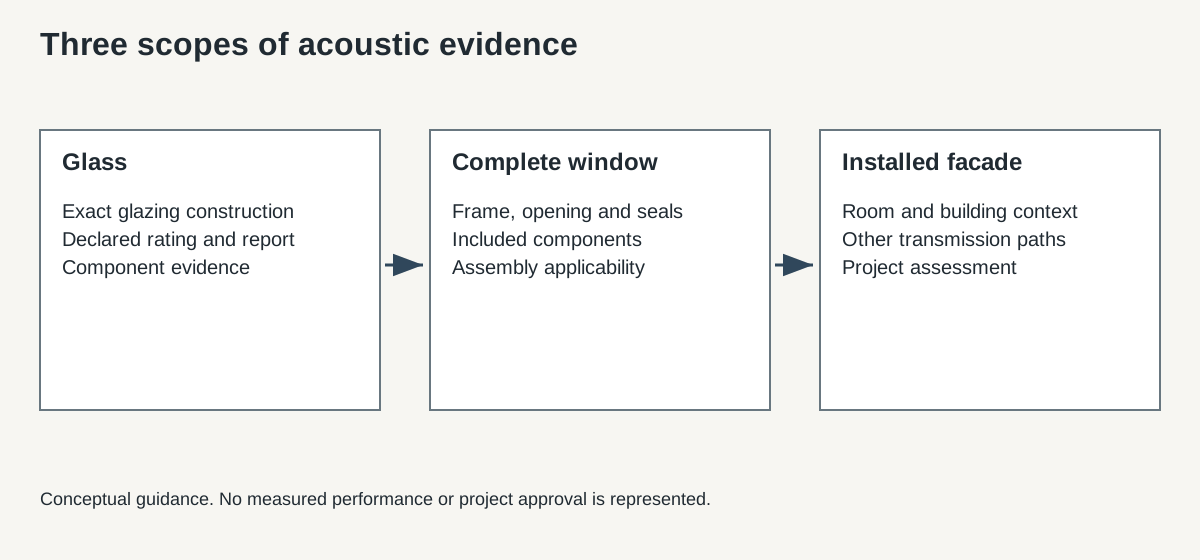
Manufacturer glazing databases can help identify assessed constructions and report references. Before using a figure, check whether it describes glass, a complete window or something else. Match the quantity and configuration to the brief.
Use Rw, C and Ctr explained and the test-report guide to organise that review. Do not mix glass-only results with complete-window results in an unqualified ranking.
Researching your own home?
For a homeowner introduction before using this specification guide, read the homeowner guide to glazing and noise reduction on our related Soundproofing Windows site.
Discuss a bespoke system
Once the project constraints and requirements are understood, ask suppliers to explain the proposed assembly and evidence. Share the brief with Hugo Carter for review of a potential bespoke acoustic window system.